Instructions for Sample Collection

CHILDREN UNDER 18 MUST BE ACCOMPANIED BY A LEGAL REPRESENTATIVE OR AN ADULT.
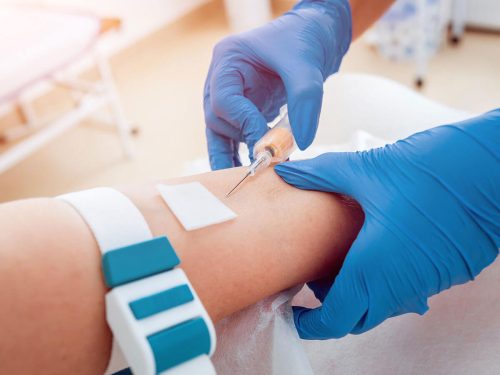
Blood draws
Urine collection
Stool sample collection
Testing for occult blood
Blood draws
chemlabs-39

Before the blood draw, drink at least 3 dl of plain water or unsweetened tea.

If the sample is to be taken while fasting, do not eat breakfast; instead, bring it with you and eat it after the procedure.

If you are prone to fainting, please inform the nurse beforehand; the blood draw will be performed while you are lying down.

If you are taking blood-thinning medication, please inform the nurse in advance.

Urine collection
Stool sample collection
Testing for occult blood

Instructions for specific examinations

Here you will find more detailed instructions for specific examinations.
The client arrives at any of our sample collection clinics.
They inform the nurse that they wish to provide a urine sample for drug screening.
The nurse provides a collection container, and the client must urinate in the restroom under the nurse's supervision (a measure to prevent the client's urine from being swapped with someone else's).
The client hands the container to the nurse, who arranges for its transport to the laboratory.
It is ideal to have the blood sample taken in the morning while fasting.
For two days prior to the blood draw for this test, one should avoid any manipulation of the prostate (such as prostate massage, prostate examination, ultrasound, biopsy, cystoscopy, or rectal examination) and refrain from ejaculation; cycling should also be avoided.
Before having your blood drawn, inform the nurse about any blood-thinning medications you are taking (e.g., Warfarin, Aspirin, Anopyrin, etc.).
For long-term monitoring, it is advisable to collect samples under the same conditions as the initial sample, as prolactin concentration is influenced by the body's circadian (biological) rhythm.
sFlt-1 and PlGF testing: samples should not be collected from patients undergoing high-dose biotin therapy (i.e., >5 mg/day) for at least 8 hours after the last dose of biotin.
You MUST be fasting for these tests.
For long-term monitoring, it is advisable to collect samples under the same conditions as the initial sample, as concentrations are influenced by the body's circadian (biological) rhythm.
You MUST be fasting for these tests.
Cyclosporine:

It is recommended to collect samples when the drug concentration is at its minimum (IMMEDIATELY before the next dose).

Digoxin:

Samples for digoxin determination should ideally be collected 6–8 hours after drug administration.
The patient must be fasting and at complete rest for 30 minutes before blood collection.

For long-term monitoring, it is advisable to always take samples under the same conditions as the initial sample, because the concentration is influenced by the body's circadian (biological) rhythm.
Ideally, the sample should be collected from the first morning stool.
Urine must be collected in a container over a 24-hour period; the total volume of urine excreted during this time (in ml) must be recorded, and a sample sent to the laboratory.

For long-term monitoring, it is advisable to collect samples under the same conditions as the initial sample, as concentration is influenced by the body's circadian (biological) rhythm.
After emptying the bladder, the patient drinks a large glass of water, and a urine sample is collected within one hour.
A midstream urine sample is required (retained in the bladder for at least 3 hours).
The swab is best taken in the morning on an empty stomach, without prior use of mouthwashes or other disinfectants, which can skew laboratory test results. Certain toothpastes can have the same effect (ideally, do not brush your teeth).

Do not smoke, eat, or chew gum or candy for one hour before the swab is taken.

cs_CZCzech